Way, Truth, Life
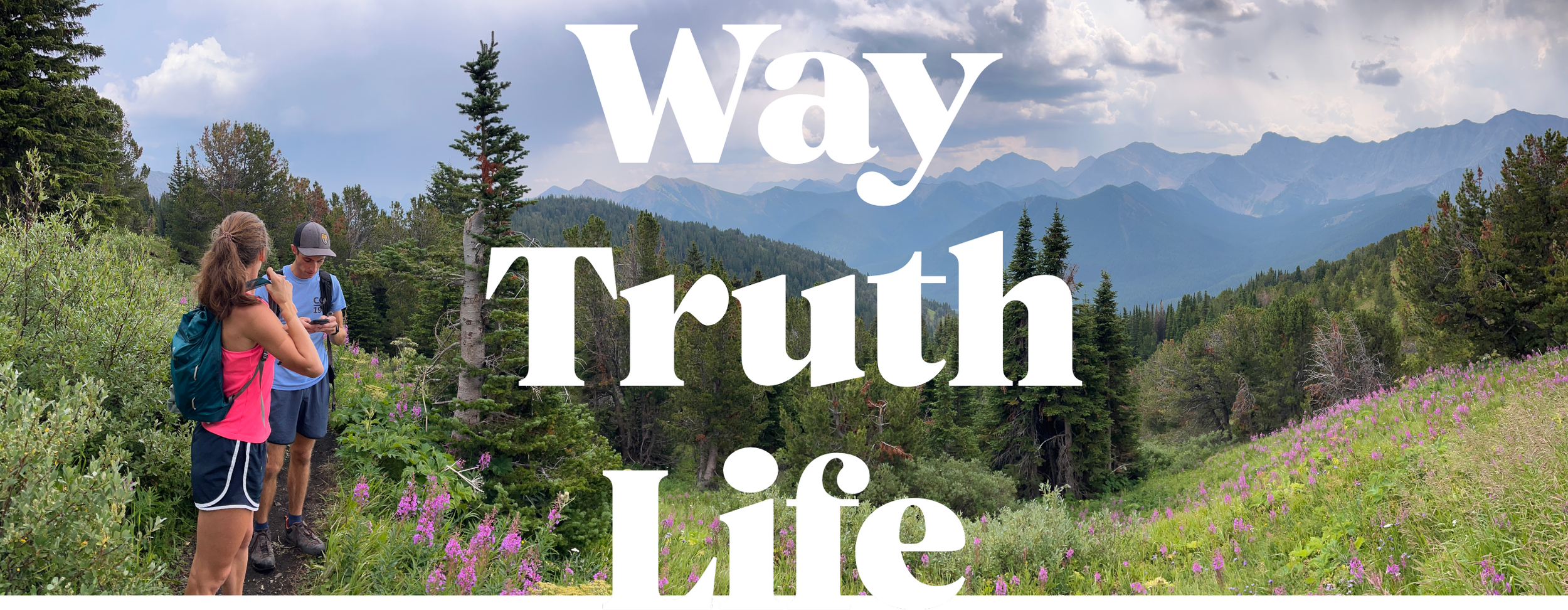
We were three and a half miles in before we realized our mistake. A few years ago, my brother, a friend, and I spent a week hiking in the Canadian Rockies around Banff National Park. The provincial parks in Alberta are just as stunning as the national ones, so we decided to spend a day off the beaten path in Elbow-Sheep Wildland Provincial Park two hours south of Canmore. After researching several hikes, we figured summiting Mist Mountain via the Mist Mountain trailhead would be the right combo of distance + elevation gain + time on trail + rewarding panoramic view at the top. According to our guidebook, the trail was remote, but the description spelled out enough details for us to be excited and confident about our choice. So we loaded the car bright and early, drove the two hours south, and parked along the side of the road where we’d pinned the GPS coordinates.
The path was neither well marked nor well worn, which is great if you’re trying to avoid tourists and not super great if you’re trying to avoid getting lost or eaten by bears. But we found what seemed to be the start of the trail and began our ascent. For the first 30 minutes we wound our way through a stand of lodgepole pines that eventually opened up to a more meadowy view of the surrounding range. It started to rain, which only added to the beauty! The more we walked, though, the less certain we became that we were on the right path. The northwestward direction of the trail and the mileage where the hike transitioned from dense forest (montane zone) to wildflower meadows (subalpine zone) to rocky scree field above the tree line (alpine zone) didn’t seem to match the description of the Mist Mountain summit hike we read about in the guidebook. We pressed on anyways. A few hours and a few miles later, our trail led us to the top of an adjacent mountain where we stood in the cold rain looking across the valley at the peak we had intended to climb. From the very start, we had been walking the wrong path.
It’s easy to look back sometimes and discover we’re a ways down a path we never intended to walk, especially if the path isn’t well worn before us. And the same can be true when it comes to walking in the ways of the world vs. the Way of Jesus (discipleship), I think. John Mark Comer writes, “If we’re not being intentionally formed by Jesus himself, then it’s highly likely we’re being unintentionally formed by someone or something else” (Practicing the Way). Things like greed, fear, instant gratification, pride, political power, cultural trends, or peer pressure sometimes pull us off course. The ways of this world are dramatically different than the Way of Jesus, and they often lead us further away from—rather than further up and in toward—the Life that is truly life. Before we know it, we can wind up following our own way to a life that is adjacent to the full one Jesus invites us into.

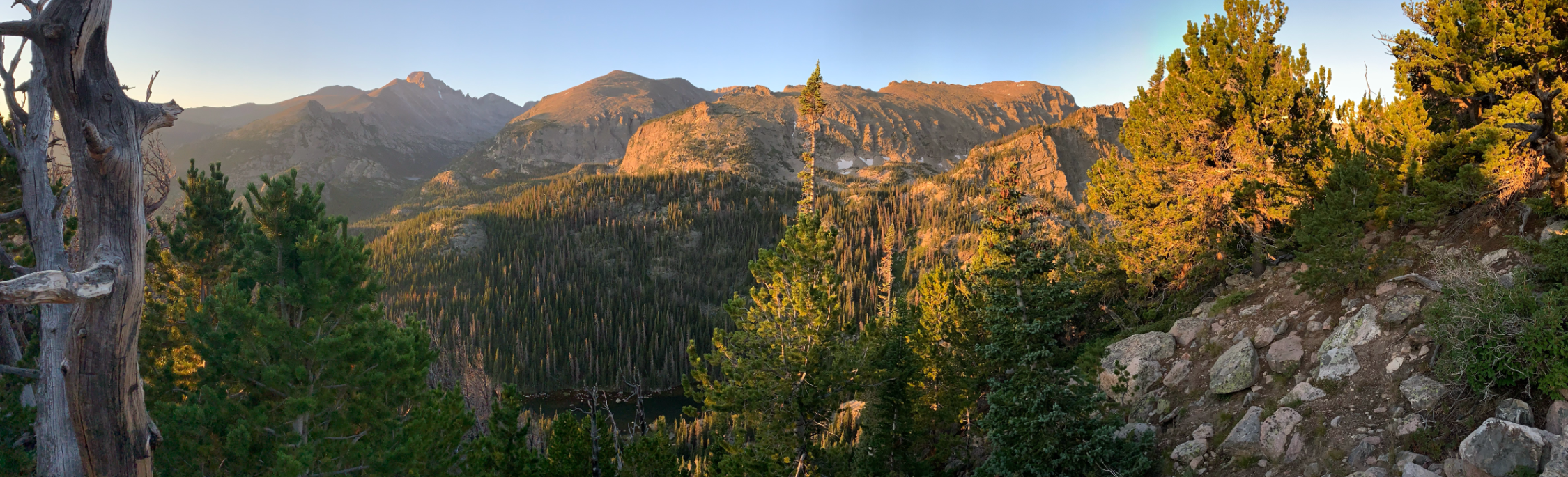
Imagine you’re standing at the base of a mountain at sunrise. The air is cool. The ground is damp with morning dew. There are no signs. No trail markers. No other hikers. No worn footprints in the dirt. Just a small clearing in the trees that suggests, “You could start your ascent here.” So you begin blazing your own trail. Every step you take bends grass, presses soil, snaps twigs. Spanish poet Antonio Machado once wrote: “Traveler, there is no path. The path is made by walking” (Caminante, No Hay Camino). I think he’s saying that trails only exist because someone walked them first; before a path becomes clear, someone has to go ahead. Left to our own devices, we tend to get lost. But Holy Week reminds us that Jesus walked a trail no one had ever walked before—the way of suffering, mercy, humble obedience, and sacrificial love. And because he walked it first, a path now exists for the rest of us to follow.
“Jesus walked this lonesome valley
He had to walk it by Himself
O, nobody else could walk it for Him
He had to walk it by Himself”
So when it comes to living rightly and walking in the way we should go, how do we know the Way? How do we know which path to walk? Which actions and decisions lead to Truth and Life? Modern Christians spend a lot of time talking about belief—what we think, what we agree with, what we say we believe about Jesus. But the Gospels consistently present something deeper: a way of life. N.T. Wright wrote that “Jesus’ kingdom way of life was not a set of abstract ideas but a path to be walked.” A Way to be practiced. Dallas Willard said something similar when he wrote that to follow Jesus is to become his apprentice... to organize our entire lives around 1) being with Jesus, 2) becoming like him, and 3) doing as he did (The Divine Conspiracy).
Those of us wrestling with what it means to walk that path are in good company, because Thomas and the other disciples asked Jesus the same question the night before his death: “‘Lord, we don’t know where you are going. How can we know the way?’ Jesus said to him, ‘I am the way and the truth and the life’” (John 14:5-6). Jesus told his followers this—that he himself is the path—immediately after the Last Supper. Mere moments later he would show them what he meant, starting with his arrest.
Holy Week begins with the celebration of Palm Sunday. As Jesus enters Jerusalem, crowds wave palm branches and shout for joy (see Matthew 21). They imagine a triumphant king who will overthrow their enemies and restore their nation. But beneath all the pageantry of the parade lies a deeper truth: Jesus is stepping onto the hardest trail imaginable, and he’s doing it willingly. Though the crowd doesn’t yet understand it, Jesus knows the path he’s actually walking: it’s the path of humility. The path of suffering. The path that leads through the loneliness of betrayal and ultimately to death on a cross. By week’s end he will be arrested, put on trial, beaten, made to carry the means of his own death through the streets of Jerusalem, and crucified... all for love’s sake.
Earlier in his ministry, in the Sermon on the Mount, Jesus describes the life of God’s Kingdom. It’s a Kingdom built on humility, mercy, peacemaking, and enemy-love where the first become last and the last become first... where the mighty are brought low and the lowly are exalted. During Holy Week, we see Jesus practice what he preaches:
• The humility he teaches in the Beatitudes is the humility he embodies as he rides into Jerusalem on a donkey (Matthew 21:1-11) and kneels to wash his disciples’ feet (John 13:1-17).
• The mercy he preaches is the mercy he offers to Judas who betrays him (Matthew 26:14-16, 47-50), Peter who denies him (Matthew 26: 34, 69-75), and the crowd who shouts, “Crucify him!” (Matthew 27:15-23). Jesus embodies the fullness of this mercy to the very end with his plea from the cross: “Father, forgive them, for they do not know what they are doing” (Luke 23:34).
• The surrender he calls for is the surrender he models in the Garden of Gethsemane as he prays, “Father, if you are willing, remove this cup from me, yet not my will but yours be done” (Luke 22:42). And from the cross, his dying words: “Father, into your hands I commit my spirit” (Luke 23:46).
At the cross, the truth about humanity becomes painfully clear—our fear, our violence, our ability to reject the very God who came to save us. Yet the cross also reveals a much deeper Truth: God loves creation so much that God will stop at nothing to restore us. God’s is a love that refuses to turn back, a faithfulness that endures suffering, a grace that doesn’t give up until all are forgiven and made whole and even death gives way to new life. If the story ended on Good Friday, the trail would simply disappear into darkness. But Easter morning changes everything.
Every hiker knows the feeling of emerging from a dark forest onto a sunlit ridge. Suddenly the horizon opens. Light floods the path. What seemed endless finally reveals beauty and life. Easter morning is that moment. The trail that led through suffering, betrayal, and death now opens into resurrection life. Death was never the destination; LIFE was. N.T. Wright describes the resurrection as the moment when God launches new creation in the middle of the old (Surprised by Hope: Rethinking Heaven, the Resurrection, and the Mission of the Church). The path Jesus walked did not end with defeat at the cross; it led through death into new and everlasting Life!
Imagine arriving late to that same mountain trail from earlier. The grass is bent. Footprints mark the dirt. Branches have been pushed aside and there are signs at each junction pointing the way to the destination—eternal life with God. Someone has already gone ahead of you. And because he walked the trail first, you can now follow. That is the invitation of Holy Week. Jesus walked a path no one had ever walked before... to make a Way where there was no way. Now that the path is clear, step by step we follow.