
Change of Heart: Stories of Christmas Conversion

If anyone needed a Christmas miracle, it was Ebenezer Scrooge. You know the guy — the “bah, humbug” curmudgeon who grumbled through life clutching his coins and scoffing at carols. But what if A Christmas Carol isn’t just a ghost story with a happy ending? What if it’s a glimpse of redemption — the kind that lies at the very heart of Advent and the story of Christ’s Incarnation?
A Heart Like Winter
When Charles Dickens wrote A Christmas Carol in 1843, England was in the grip of industrial coldness — factories coughed smoke, children worked in the streets, and compassion was in short supply. Dickens gave the world Scrooge as a kind of mirror: the man whose heart had frozen over from his trauma, loss, and obsession with money. Scrooge may have been the first character of his kind in modern history, but he wasn’t the last holiday-hater. Dr. Seuss’ How the Grinch Stole Christmas features a character even more loathing of Christmas than Scrooge. While Scrooge tries to ignore Christmas, the Grinch vows to “stop Christmas from coming… but how?!” The bible also features characters with cold hearts:
Exodus 7 says Pharaoh’s heart was hardened when Moses and Aaron tried to negotiate the release of the Israelites from Egypt.
Matthew 2 depicts Herod with a hardened heart. Feeling threatened by Jesus’ birth, Herod calls for all infant boys in the Bethlehem region to be killed.
On multiple occasions in the Gospel of Mark (3:5; 6:52; 8:17), Jesus attributes the pharisees’ and disciples’ lack of understanding to hardness of heart.
If we’re honest, we all have a little Scrooge or Grinch in us. We, too, are influenced by the coldness of the times we’re living in. Maybe we’ve grown cynical. Maybe the weight of the world has made us stingier — not necessarily with money, but with grace, with joy, with kindness or patience. Advent invites us to pause and recognize those frosty corners of our hearts that need thawing.
Heart Warming
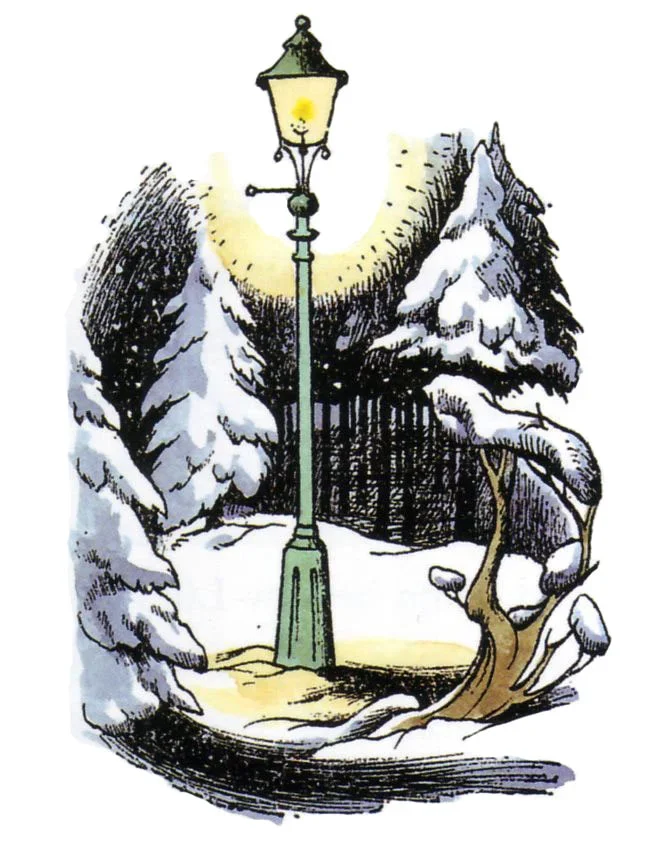
One of my favorite bands wrote a song titled “In Like A Lion (Always Winter)” based on C.S. Lewis’s book The Lion, The Witch and the Wardrobe. The chorus of the song goes:
“It’s always winter but never Christmas
It seems this curse just can’t be lifted
Yet in the midst of all this ice and snow
Our hearts stay warm cause they are filled with hope”
In the book, Narnia is under the spell of the White Witch who has forced eternal winter upon the land and animals. According to Mr. Tumnus, it’s been that way for 100 years. But when Aslan (the character representing Jesus) returns to Narnia, the cold, dying world begins to thaw and come back to life.
Hope has a warming effect. Jesus has a warming effect. Even when all the world around us feels cold and dark, the hope we have in Christ can warm our hearts and keep our spirits alive. The advent season is full of heart-warming moments: slow meals around the table with people you love; stories told for the hundredth time; kids running to the window at the first hint of snow; friends reconnecting after a long time apart; carols echoing through the halls of care facilities; fires in the fireplace; an evening decorating the house or curled up with a book… All of these heart-warming moments point us to the source of Light and warmth - Jesus and his incarnation.

The same day Jesus rose from the dead and walked out of the tomb, two of the apostles were walking on the road leading out of Jerusalem toward Emmaus. They were discouraged, their faces downcast as they discussed the events of the week. Their friend and teacher – their Messiah – had been crucified. As the apostles walked and talked, Jesus himself – now back from the dead – came up and walked along with them, but they didn’t recognize it was him. How could it be?! Jesus meets them in their grief and opens the scriptures to them. When the three men reached Emmaus, they shared a meal, Jesus broke bread, the apostles eyes’ were opened to the reality that the man they shared the walk and the meal with was Jesus, and right then Jesus disappeared. Reflecting on the encounter, the apostles said, “Were not our hearts burning within us while he talked with us on the road and opened the scriptures to us?” That burning wasn’t just emotion – it was the presence of Christ melting away despair and rekindling hope. Christ’s presence through his incarnation has the very same effect on the world.
At Christmas we celebrate that God is with us – Emmanuel. As Jesus draws near to us through his incarnation and walks with us down whatever roads we’re on, may our hearts burn within us. May we be so moved by his love, so filled with hope by his presence, that those frosty corners of our hearts start to thaw and we become more like Christ whose light warms and increases the joy of everyone who encounters him. Advent is a time the church sets aside to prepare believers’ hearts for Christ’s birth. The prophet Ezekiel wrote about God’s promise to replace hearts of stone with hearts of flesh (Ezekiel 36:26-27):
“I will give you a new heart and put a new spirit in you; I will remove from you your heart of stone and give you a heart of flesh. And I will put my Spirit in you and move you to follow my decrees and be careful to keep my laws.”
The beloved hymn “Here I Am, Lord” expresses the same commitment: “I will break their hearts of stone, give them hearts for love alone.” That’s exactly what happens to Scrooge – he receives a new heart, one that beats again with compassion and joy. The same happens to the Grinch – “his heart grew three sizes that day.” And that’s the work of God’s Spirit in you and me, too.
Redeemed & Reborn
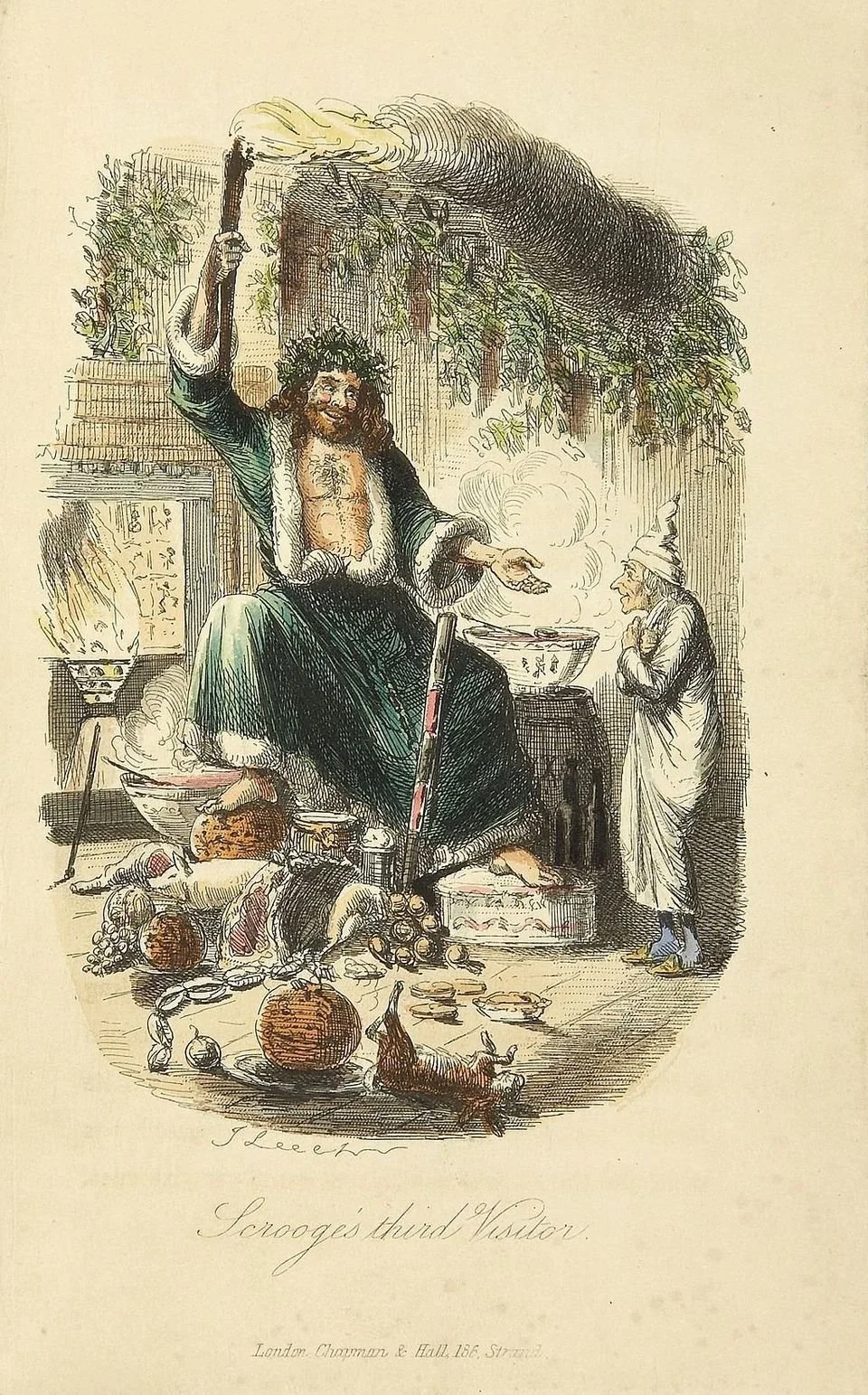
Throughout A Christmas Carol, Scrooge is visited by three ghosts, each showing him a different aspect of his life in order to prompt his redemption:
1. The Ghost of Christmas Past shows Scrooge scenes from his own past, which help him understand how he became the cold-hearted man he is today.
2. The Ghost of Christmas Present shows Scrooge the joy and warmth of Christmas around the world, most notably in the humble but happy Cratchit home. Scrooge sees their struggles and feels pity for Tiny Tim, which evokes remorse over his own stinginess.
3. The Ghost of Christmas Yet to Come shows Scrooge the bleak future he faces if he doesn’t change his ways. The vision reveals the consequences of Scrooge’s greed and the indifference people will feel toward his death.
Ultimately, Scrooge is so stirred by his experiences with the three ghosts of Christmas that he realizes he needs to change in order to avoid a terrible fate and to live a life of generosity and kindness. He tells The Ghost of Christmas Yet To Come, “I hope to live to be another man.” By the end of Dickens’ tale, Scrooge is practically unrecognizable. He laughs — really laughs — for the first time in years. He gives generously. He loves deeply. He lives differently. Dickens describes him as “better than his word… as good a man as the good old city knew.” That’s quite the conversion!
Advent is the season that reminds us God hasn’t given up on anyone — not on Scrooge, not on us. At the birth of Jesus, heaven breaks into our cold world with warmth, light, and hope. The manger whispers what the cross will one day shout: you are redeemable. No heart is too hardened or cold, no past too dark. Paul wrote about this truth in his letter to the Jesus-followers in Rome. He wrote, “I am convinced that neither death, nor life, nor angels, nor rulers, nor things present, nor things to come, nor powers, nor height, nor depth, nor anything else in all creation will be able to separate us from the love of God in Christ Jesus our Lord” (Romans 8:38-39). Christmas teaches us about a God who loves us too much to leave us alone, even those of us who feel lost or forgotten. Through the advent lessons – stories of hope and joy and obedience and love – God’s Spirit prods, pokes, and nudges us toward the manger. Toward Christ. Toward our own rebirth.
Paul wrote to the church in Corinth saying, “If anyone is in Christ, they are a new creation; the old has gone, the new has come!” (2 Corinthians 5:17). Who better to speak with conviction about the heart-change that’s possible through Christ than Paul who himself experienced a profound conversion on the road to Damascus? Paul (named Saul before his conversion) had persecuted Christians, even threatened disciples of Jesus with death. While on the road, a bright light flashed around Saul and he heard a voice saying, “Saul, why are you persecuting me?” Saul asked who was speaking and the voice said, “I am Jesus, whom you are persecuting.” This encounter with Christ completely changed Saul’s heart. After his conversion, Saul became Paul and began to preach the gospel, proclaiming Jesus as the Son of God and eventually becoming one of the most important figures in early Christianity.
Keeping Christmas Well
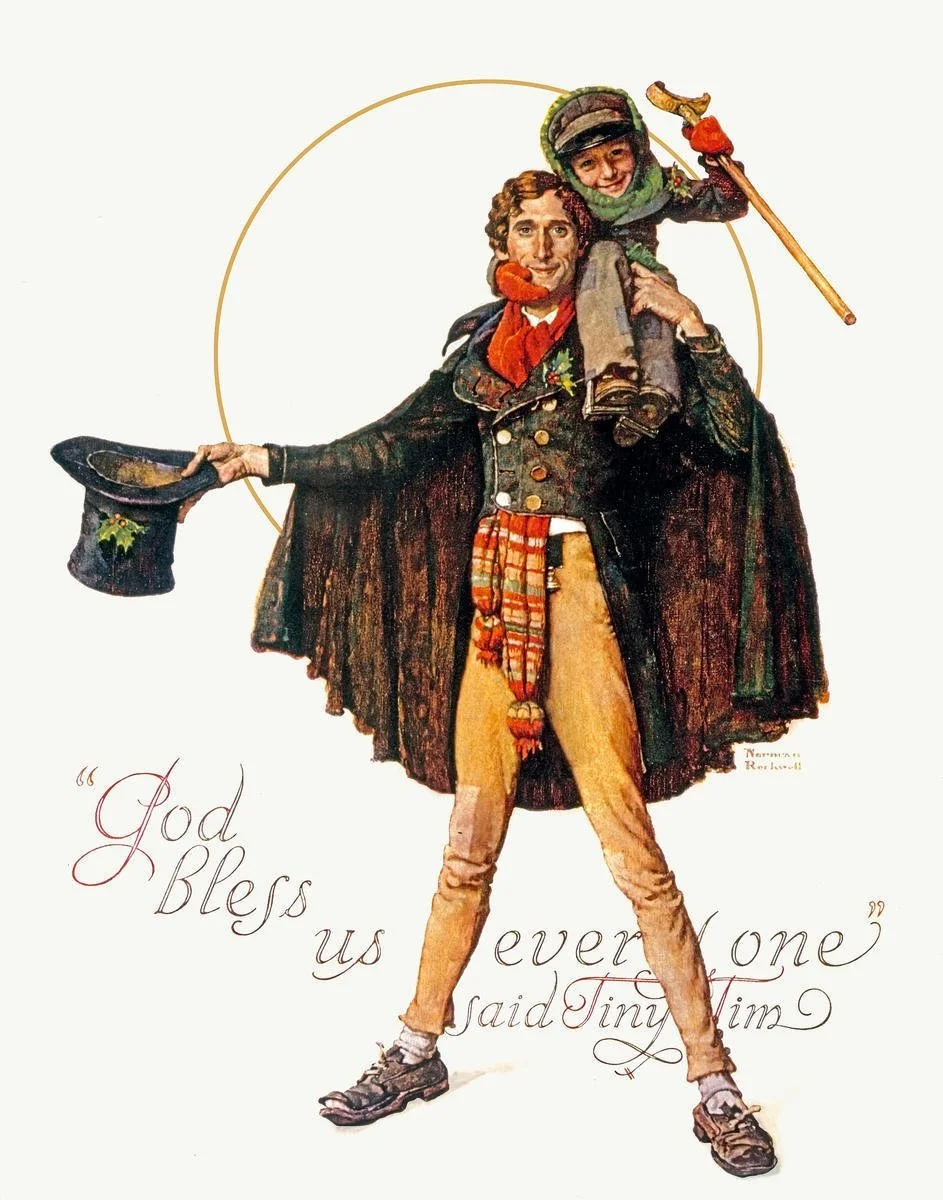
We love stories of transformation at Christmastime. The ones where cur- mudgeons become charitable and kind. After all, what could be more transformative than the Incarnation? Scrooge’s Christmas conversion – and others like it – mirrors what Christ can do in every heart that lets Him in. Scrooge’s final words can serve as an Advent prayer for us all: “I will honor Christmas in my heart, and try to keep it all the year.” What if we did the same? What if we lived with Christ’s incarnation in our hearts the whole year round? That’s what Advent prepares us for — not just to celebrate Christ’s birth, but to embody it. To live in the daily reality that Christ has chosen to make a home here on earth and in our hearts. The transformation that happened in Scrooge, in the Grinch, in Paul can happen in us — not by ghosts, but by grace. So maybe this Advent, as you light candles, hum carols, share feasts, and wait for Christmas morning, remember: God is still in the business of turning “bah, humbug” into “God bless us, every one.”
